
What Can the Middle East Learn from Europe’s High Performance Building Envelopes?
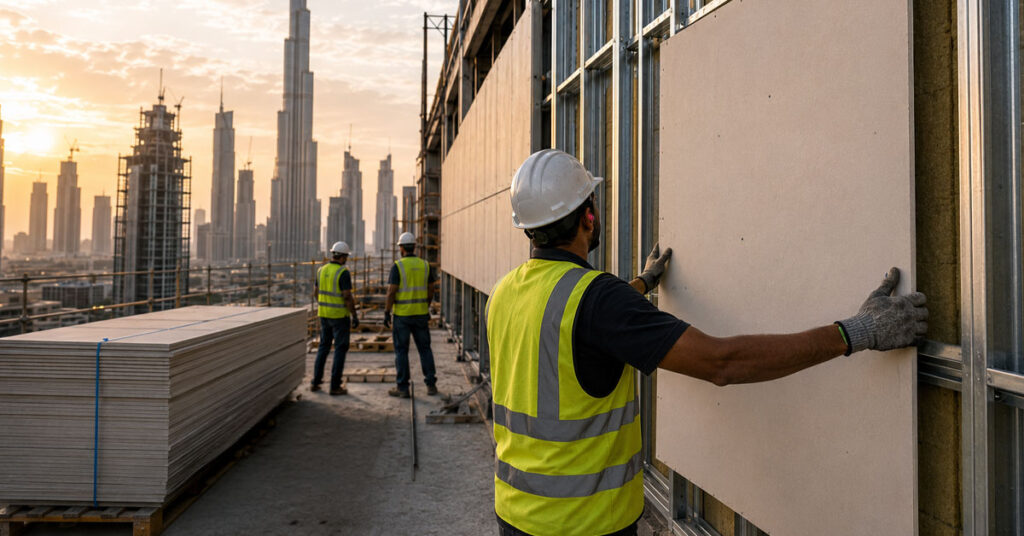
What Can the Middle East Learn from Europe’s High Performance Building Envelopes? For decades, Europe has been moving beyond the idea that a façade is simply the “skin” of a building. Today, the building envelope is increasingly treated as a high-performance engineered system, where every layer has a defined purpose. From structural framing and insulation to sheathing and external cladding, the performance of the entire assembly depends on how effectively these components work together. The Building Envelope: A System, Not Just a Surface Across leading European markets, building envelopes are designed as integrated systems using components such as lightweight steel framing (SFS), sheathing boards, insulation and ventilated rainscreen cladding. When properly designed and installed, these systems can deliver: Better thermal efficiency — helping reduce energy loss and improve occupant comfort.Enhanced weather resistance — protecting the building from rain, wind and moisture ingress.Improved fire performance — through tested and engineered assemblies.Long-term durability — with systems designed for reliable performance throughout the building lifecycle. The key lesson is simple: no individual layer delivers the complete performance on its own. The result depends on the design, specification and execution of the complete envelope. The Opportunity for the GCC This approach presents a significant opportunity for the Middle East. The GCC is rapidly developing high-performance, energy-conscious buildings, but the region’s environmental conditions create challenges that demand careful envelope engineering. Extreme temperatures, intense solar radiation, coastal humidity, wind-driven sand and dust, and significant thermal movement can place considerable stress on building envelopes.Furthermore, the region’s intense thermal cycles where the region’s significant temperature variations can also contribute to thermal expansion and contraction in building materials. Without appropriate movement detailing and a coordinated envelope system designed to accommodate these effects, buildings may be exposed to increased risks of cracking, joint failure and moisture infiltration. cause extreme expansion and contraction in standard building materials. Without a coordinated envelope system engineered to absorb this thermal stress, buildings risk premature cracking, structural joint failures, and costly moisture infiltration. A successful façade therefore needs to do more than create an impressive architectural appearance. It must help manage heat, moisture, fire, movement and weather exposure while supporting the building’s long-term performance. Considering these factors during the early design and specification stages can help reduce lifecycle costs, minimize maintenance risks and ensure the building continues to perform as intended long after completion. Engineering the Next Generation of Façades At JIFCO Group, we believe the future of external cladding lies in a system-based approach—bringing together sound engineering, appropriate materials and disciplined site execution. This means: Selecting the right combination of framing system, insulation(if required) and cladding for the building.Designing for thermal performance and moisture management from the beginning.Prioritizing fire-rated and tested assemblies that meet applicable regional and international standards.Maintaining the same level of engineering discipline during installation as during design. Because a high-performance building envelope is only as effective as its weakest component—and only as reliable as its installation. Looking Beyond the Façade Europe’s experience offers an important lesson for the GCC: the future of façades is not simply about what a building looks like, but how intelligently it performs. As Middle Eastern cities continue to push the boundaries of architecture and sustainable development, building envelopes will play an increasingly important role in energy efficiency, resilience, safety and long-term asset performance. The next generation of façades shouldn’t just look better. They should perform better. About JIFCO Group JIFCO Group approaches external cladding and building envelope solutions with a focus on engineering, material selection and quality execution. By integrating systems such as lightweight steel framing, insulation, sheathing and external cladding, JIFCO aims to support high-performance building envelopes designed for demanding regional conditions. Engineered to Perform. Built for the Future.
What Can the Middle East Learn from Europe’s High Performance Building Envelopes? Read More »