In today’s construction industry, choosing the right facade material plays a major role in the durability, appearance, and performance of a building. Two commonly used options in exterior cladding systems are sheathing boards and cement board facades. While both serve important functions, understanding their differences helps property owners, contractors, and developers make the right decision for their projects.
What is a Sheathing Board?
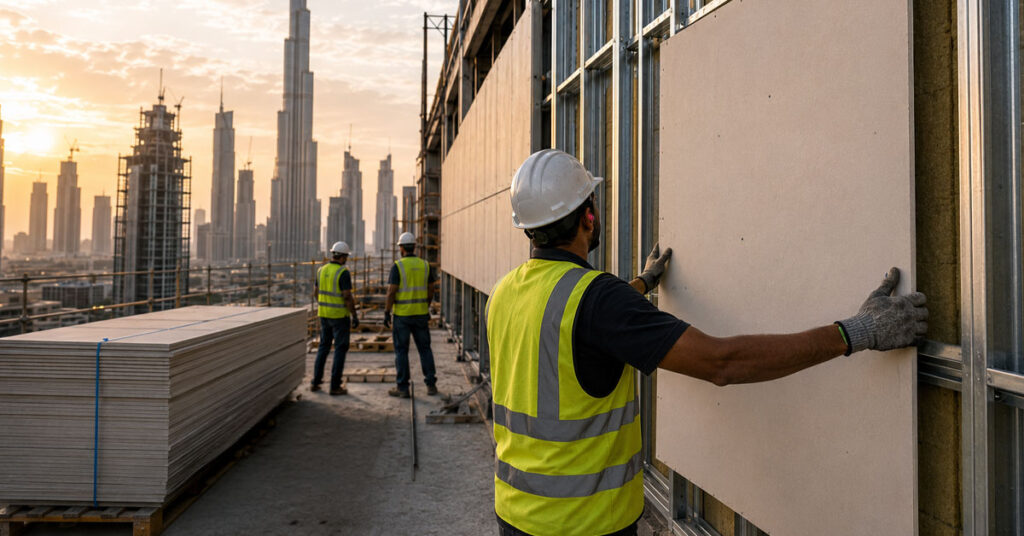
A sheathing board is a structural panel installed on the exterior framework of a building. It acts as a supportive layer beneath the final cladding material and improves insulation, weather resistance, and structural stability. Sheathing boards are commonly made from gypsum, plywood, OSB, or fiber cement materials.
These boards are mainly used as a base layer rather than the final visible facade. They provide excellent support for waterproofing membranes, insulation systems, and decorative finishes. In modern commercial and residential projects, sheathing boards are valued for their lightweight nature and ease of installation.
Advantages of Sheathing Boards
- Lightweight and easy to handle
- Improves thermal and moisture protection
- Faster installation process
- Cost-effective for large-scale projects
- Provides a smooth base for exterior finishes
However, standard sheathing boards may not always offer the same level of impact resistance and long-term durability as cement board facades, especially in harsh weather conditions.
What is a Cement Board Facade?
A cement board facade is an exterior cladding solution made from cement reinforced with fibers and other durable materials. Unlike traditional sheathing boards, cement boards can function as both a support layer and a finished facade surface.
Cement board facades are widely used in modern architecture due to their strength, weather resistance, and sleek appearance. They are highly resistant to moisture, fire, termites, and temperature fluctuations, making them ideal for demanding environments such as the UAE climate.
Advantages of Cement Board Facades
- Exceptional durability and strength
- High resistance to water and fire
- Low maintenance requirements
- Modern and attractive finish options
- Suitable for exterior decorative applications
Although cement boards are generally heavier and slightly more expensive than sheathing boards, their long-term performance often makes them a worthwhile investment.
Which Option is Better?
The choice between sheathing boards and cement board facades depends on the project requirements. If the goal is to create a strong backing system for exterior finishes while maintaining cost efficiency, sheathing boards are an excellent choice. On the other hand, if durability, aesthetics, and weather resistance are top priorities, cement board facades provide superior long-term value.